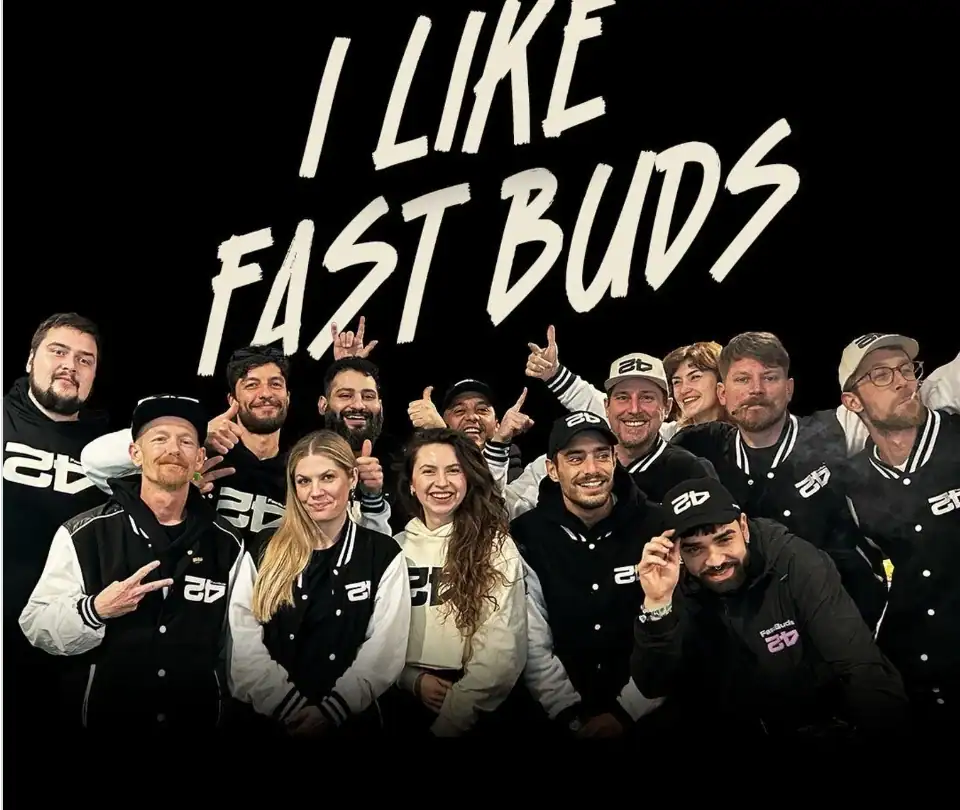
The managing partner of one of the world’s best-known autoflower seed banks rarely gives interviews. He talked to The Cannex about how the brand was born, what stabilization really means, who is behind the Reddit campaign against Fast Buds, what happened with Sebastian, and why 80% of selections end up in the trash.
Fast Buds is one of the most recognizable seed banks on the autoflowering market. The company started with the idea of bringing American genetics into autoflowering form; today it develops its own lines, collaborates with Californian farmers, and has opened a branch in the USA. Stan, partner and managing director of Fast Buds, rarely appears in public. The Cannex talked to him about how it all began, how breeding works from the inside, how many people actually work at the “huge conglomerate,” and why competition is fuel.
Over the years you must have given dozens of interviews. Which questions are you most tired of? I’ll cross them off right away if they’re on my list.
To be honest, I’ve given very few interviews in person. I can’t say I’m tired of anything. So I’m ready to answer everything.
“A lot of time passes between the idea and going public”
Let’s start with the brand’s history. In a 2016 interview with the Russian grower portal Dzagi, the company’s story begins in California in 2010. Today, the official version starts the count from 2012. What was happening in each of those years, and which one do you yourself consider the birth of Fast Buds?
Officially, the Fast Buds name was coined and the first genetics were indeed made in 2010. But quite a lot of time can pass between the moment you come up with something and make it and the moment you go public. I joined the company in 2012. We were already obtaining various permits in Spain and so on. And by late summer or September 2013, we officially launched in Europe.
Your story features American breeders who came to Europe and opened their bank here. What stopped them from doing it in America? Why this way?
In 2010 in California, you could easily go to prison for growing cannabis, for breeding, for selling seeds. Some people did it in other states at their own risk, but there was no market as such in America at that time. And no breeding technologies either.
Besides, the company’s founder came to Spain and spent the first years working on seeds for other brands. When you’re just starting out, you have no money at all, only an idea. And you still need to eat. I don’t want to name any names, but there were these small home garages where someone was doing something. And then one Dutchman would go round everyone, collect those seeds, and with a satisfied look drive them to Holland on his motorcycle — to sell to the cool Dutch seed banks, let’s say.
So Europe was the more advanced market back then.
Yes, yes, yes.
The company’s website mentions two breeders who were there at the origins. Who were they, and what role did you play yourself, if that can be published?
I can’t say who it was. The person who remains my main partner to this day doesn’t want to be public: he has other businesses and his own reasons. The second breeder left the company long ago, for personal reasons, right at the very beginning, when Fast Buds wasn’t Fast Buds yet.
As for me, I’m not from the industry at all. I was hired at the time as a financial consultant. I had my own consulting company in Barcelona; I set up companies mainly for foreigners — back then few people specialized in clients with particular requirements. We somehow became friends, found common ground, and the subject seemed very interesting to me. At first I treated it as something secondary — before that I’d had quite a few different businesses, some worked out, some didn’t. Mostly they didn’t. Then it grew into a full-time job, and now Fast Buds is where it is.
Are you still involved in any of those businesses?
Almost none. I had my own restaurant, a bicycle shop, a consulting agency. Consulting is the only thing I still do, but in very specific circles, on specific topics. And very expensive consulting.
Cannabis-related?
No, more to do with finance.
“The concept today is much broader”
In an old CannaConnection interview, you described the business idea simply: find popular American genetics and make autoflowering versions of them. Is that still an accurate description of Fast Buds today?
No, today everything has changed a lot. We were the first to make American autoflowers — that was probably one of the main reasons for our success. We essentially brought the idea itself to Europe: when Fast Buds appeared with its first Californian strains, all that was sold in Europe was White Widow, Critical and the like.
Today it’s much more than that. We still do things like that — we select material from the coolest breeders and work with clones; we recently bought a super-expensive Todd Venom clone, Giraffe Pussy. We keep making selections from the most renowned seed-bank strains.
But other directions have appeared too. First, we develop autoflowers in their own right — different lines, backcrossed. Take Cherry Cola: we now have it in an RF3 version. We had a very cool autoflower, Strawberry Pie — a rich strawberry smell, fairly high THC, very resinous, lots of trichomes. And in one of the cycles we noticed a particular phenotype that didn’t just smell of strawberry: it looked slightly different, and after drying it smelled of cherry cola. We separated that phenotype, made a new line out of it, took it to F3, F4, and then released RF3 — an even more advanced version.
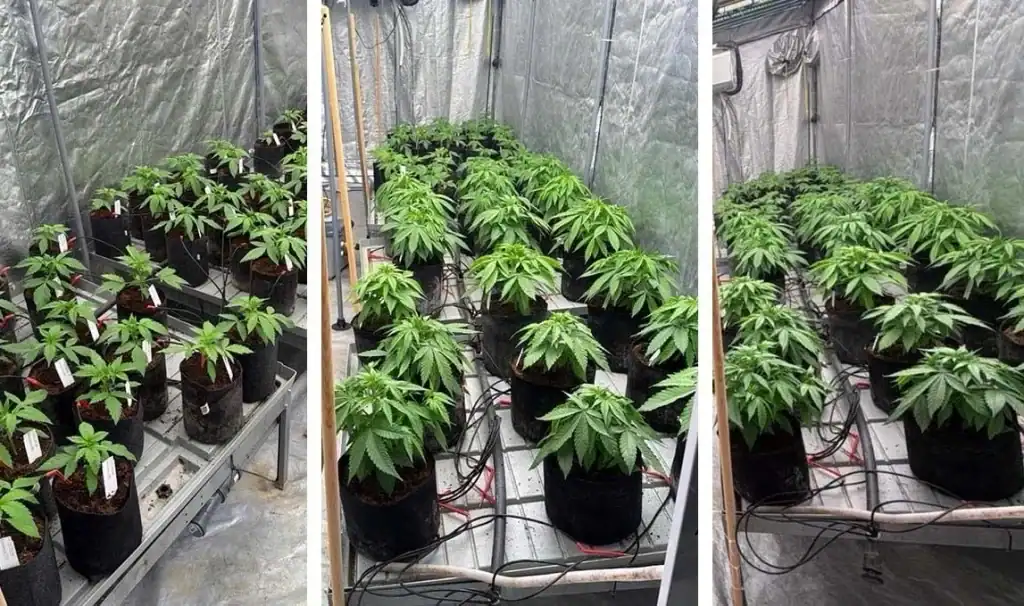
A new cycle of work with autoflowering hybrids
Second, we made a champion line: we took the best strains from other American breeders — Atlas, Mephisto — crossed them with our own champions, and got very fun, stable and interesting F1 hybrids. We took the flavor qualities of their strains and complemented them with the size and resilience of our genetics. The result was simply monsters.
Plus we recently released GMO and Lemon Tree — autos derived from photoperiod strains.
A separate direction is Fast Flowering. A very interesting project, we’re working on it intensively right now. Originally it was a side project — the intermediate stage when you turn a photoperiod strain into an autoflower. But in the end we realized that a lot depends on which strain you cross with. If you take an autoflower that gives less contamination (less unwanted genetic material from other lines creeping in), you get the same cool seed, only it finishes flowering faster, and it also has 25–30% better resistance to stress, climate conditions, heat, fluctuations.
We worked on triploids — we’re still continuing a little today, but it’s a fairly complex direction, so for now it has stayed in R&D.
And over the years we’ve accumulated a huge number of cool clones and selections, so we started releasing a fem line that we’re developing to our own taste. With fems, the most important thing is precisely the selection: even the same strain can vary enormously from clone to clone. So we make our own selections of strains that we ourselves like, and on their basis — new feminized lines.
So yes, it’s all much more global.
What Does RF3 Mean at Fast Buds?
You mentioned RF3. For the uninitiated, can you explain in simple terms what it is and what it’s for?
With RF3 we try to stabilize the plant to the maximum, practically to IBL level. The generation number can vary. Let’s put it this way: if we release an autoflower produced from a feminized photoperiod plant, that’s already F3–F4 to begin with. Then we take those autoflowers to F5, F6 and beyond — and at F6, F7 you get fairly stable genetics at the level of whole populations.
For autos, that’s a fairly difficult thing. They still have their variability; it’s still not an IBL made from S-lines. But, for example, if a Purple strain in ordinary genetics — F3, F4, F5 — gives growers roughly 70–75% purple phenotypes, in RF3 the share will be over 90%.
So RF3 is our marketing name for the most stable strains.
Roughly speaking, a grower will most likely get absolutely identical plants from the pack they bought?
Let’s put it this way: not absolutely identical. We’re still talking about brothers and sisters. Absolutely identical plants can only grow from clones. But the phenotype spread will most likely be minimal.
“It’s like incest: at some point it all bursts”
How are modern breeding technologies better than good old Grandpa Michurin’s method: plant a berry, pick the biggest one, plant it again — and so on until you grow a berry the size of a house?
That’s roughly how it all works. You just need to understand a few things. Genetics is a complicated business.
There are two ways to stabilize an autoflower. The fast one is called S. You take a plant, reverse it, cross it back to itself and get S1 seeds. You plant fifty or so of them, take the coolest one, self it again — you get S2. If you reach S3, S4, S5, you can already call it IBL. This gives maximum — let’s not even say stability, but homozygosity: all the plants will be quite similar to each other.

Apricot Auto: work on the final production version
But with this approach, any defect that was hidden in previous generations will be amplified too. The plant becomes weaker, less resilient, because there’s no genetic diversity. It’s a kind of incest that will burst at some point. One hundred percent. It might burst at S2, S3, S6, S7, S8, but at some point everything just falls apart.
The other way is working with F generations. You take brothers and sisters from different parents: the same genetics, but different mothers, different fathers, different batches. And likewise — F1, F2, F3, F4, F5. There’s less homozygosity, more phenotype spread, but the plant is more viable, less susceptible to stress, more resilient.
True, at a certain point you’ll run into incest here too. Somewhere in the middle you can play with backcrosses — cross the plant with one of its parents. You can add a similar plant into the genetics. Genetics always needs to be diluted a little. If you take one berry and keep crossing it with itself so it gets big, at some point you’ll reach degeneration: the berry will spoil quickly, rot, the plant will start mutating.
Or simply be big but tasteless.
It could be big but tasteless, yes. You can lose terpenes, flavor, THC level. We’ve had moments when we had to go back one, two, three generations. There was a great plant — and at some point a generation started producing 6% THC instead of 30%.
Wow.
That happens too. That’s why it’s very important for us to test everything we produce before releasing it for sale.
Are Fast Buds’ 30% THC Claims Real?
Since we’ve touched on the subject: many of your strains claim THC levels around 30%. How do you test that, and what can you back it up with? Obviously there’s an arms race going on between producers right now, and the numbers grow year after year.
Look. First of all, we state a level of up to 30% — that’s the maximum we’ve seen. We have our own small machine on which we test everything. But most strains on the website come with lab tests done in different countries around the world; we mostly try to do them in California. Many tests confirm the stated level, and some show even more.
For example, the Apricot strain was listed at up to 23–24% THC. In its third generation, Apricot won a cup — it was grown by one of our growers in California. At the cup the strain was tested, and it came out at 29.8% THC.
Of course, you can always pull a number out of thin air, I completely agree. But we’re one of the few brands that really does a lot of testing. We’ve built a whole section on the website with lots of articles, with video and audio material, about how we created this or that strain, this or that generation, how we hunt for phenotypes and test. And about how much of everything we have to throw away.
In your personal view, what should a reasonable THC ceiling be? I ask also because a reverse movement has started in the US: many politicians are effectively calling for legalization to be rolled back, and their main argument is that THC levels have grown many times over since then, and the plant that was originally discussed and the plant that exists now are two different plants with different risks.
I don’t entirely agree with that. First, THC isn’t the only indicator of a plant’s potency. Other cannabinoids, terpenes, their quantity and how it all interacts have a very strong influence. THC stopped being the indicator a long time ago.
Second, even before people started making high-THC plants — that’s exactly when I entered the market — BHO was super popular, where THC is extracted with butane. And THC levels in BHO reached 90+%. Right now in that same California, rosin is much more popular than plain buds. And decent rosin is 70% THC and up.
So, to me, there’s no limit, and it’s not the parameter to focus on. Although the average consumer usually looks precisely at it: oh, THC — so it’ll be strong. Not always.
“Autoflowers aren’t transported as microclones”
Back to history. An old Dzagi interview tells a story about transporting mother material to Spain in the form of microclones. Can you confirm it and tell us which original lines formed the basis of Fast Buds back then?
Let’s put it this way: autoflowers aren’t transported as microclones. Autoflowers are transported as seeds, because they can’t be cloned. You can, of course, via tissue culture, if we’re talking about microclones, but there would be absolutely no benefit to it.
Photoperiod plants, on the other hand, can be transported as microclones — that’s a fairly recent thing. But in reality most clones are still transported the old-fashioned way: in a sandwich, in a pocket, and so on.
The current Girl Scout Cookies Auto card lists a Girl Scout Cookies clone. What was that source material, and how did you verify its origin?
We bought the Girl Scout Cookies source material in California. Honestly, I have no hundred-percent guarantee of its origin. We had, and still have, a supplier — a nursery that provides clones to many people. Originally it operated on the black market; now it works legally. We would go to this supplier, look at the goods, test them, and if we liked them — buy.

Work on a new version of Amnesia Haze Auto
So you selected what you liked and then brought it to perfection.
Well, perfection is a big and stretchy concept. We did everything we could with those strains.
Your Gorilla Auto description lists GG Strains genetics as the source. And in January 2026 you talked about selecting three Gorilla Glue 4 phenotypes. How are those stories connected, and what exactly did you get from the source?
The mother plant we used for Gorilla Auto is long gone: many years have passed, and you have to get rid of a lot of genetics.
Not long ago we did a new selection — we bought a bunch of seeds from GG Strains. It’s a brand whose founder, Mardogg, is no longer with us; he’s the one who released the original GG4. The Gorilla Glue name itself, like Girl Scout Cookies, can’t be used because of American trademarks, so the strains were renamed.
We planted around a hundred plants and selected three phenotypes we liked most. The auto itself, if I’m not mistaken, we’ve already discontinued and practically taken off sale, and we use those phenotypes in new crosses — Gorilla Melon, Gorilla Sherbet and so on.
“Product alone isn’t enough to be at the top”
I think among autoflowers we’re still number one in the world. If you compare demand and sales at any distributor, there are probably brands that sell more than us overall, but in autoflowers specifically, nobody matches us in demand. It’s another matter that there are small artisanal brands that do very cool work and have great strains — we use them too in our new projects. But that’s a slightly different thing.
What do you think underlies Fast Buds’ success more — genetics or marketing? In marketing you were pioneers in many ways and did things nobody else did.
We have a good product, a very good one. Possibly one of the best. But we started alongside a great many brands; there are autoflower brands that launched the same year we did. And we took off much more strongly. So product alone isn’t enough to be at the top.
If you have a really cool product but it sits in the fridge at home, you ship orders once a week, you don’t provide customer support and you don’t move anywhere, your brand and product won’t move either.
I’ve been in this business for so many years, and my partner and I get up early every day, work, fly, move around. I still spend half my life between California, Barcelona, Bangkok, London, Prague. The company is many years old, and we still work like a startup. We always need everything fast, urgently, to try everything, everything new. We invest a lot in experiments — not just with the product, but with marketing too. We follow everyone on the market from our personal Instagram accounts, we’re subscribed to everyone, we talk to everyone, we see the latest trends. We smoke the best buds all over the world. It’s all of that together. Probably the moment we stop working like a startup — I don’t know whether the company will die or not, but it will definitely stop growing.
So you haven’t turned into a big lazy holding with a rigid hierarchy?
No. I’m still in the office every day, and every employee in the company has direct access to me: anyone can come into my office or write to me. Right now I’m giving you an interview, then I’ll go prepare a newsletter, and right after that I might write an article on breeding. Tomorrow I’m flying to Denmark, to a farm, to do selection. In a week we fly to Los Angeles to check the new clones that have been prepared, to look after the office there — I already have fifteen meetings scheduled across America. We’re going to two trade shows that will be on at the time: to see what’s new in the industry, meet new people, do some networking.
In fact, we probably work even more than before. It’s just more fun and more comfortable now.
Is Fast Buds a White Label Seed Bank?

Labeled batches of Fast Buds seeds in the breeding process
Your FAQ says outright that Fast Buds is not White Label and produces its seeds itself. Where could this criticism have come from, and what would you show someone who doubts it?
Anyone who doesn’t believe us can go to our website and look at the Breeding section — there’s a ton of information there.
And the White Label topic probably concerns any old brand in general. We’re already, you could say, an old brand, not a young one. Business used to be done a little differently; it was much greyer than now. People couldn’t show much of what they show today.
Plus there are certain competitors. There’s an entire campaign against us on Reddit. I have a rough idea who’s behind it — other autoflower brands that started at the same time but didn’t achieve the same success. And it’s all by the playbook: White Label, backyard breeders, instability.
Let’s put it this way. If I as a company at a certain point didn’t have my own big facilities, but there was someone who made one strain for me on his small farm — I’d bring genetics A, genetics B, and say: cross this with that for me, I’ll come in three months, select the tops for further selection, for mothers and fathers, take the result and pay you a certain amount for it — is that White Label? Unclear.
Yes, it’s ambiguous.
Ambiguous. But at a certain point, when the laws softened, when it became possible to get licenses at least for research, everything changed: today 100% of what we do, we produce ourselves.
At the same time, I’m looking toward collaborations with other brands. All our collaborations to date we produced ourselves and handed the seeds to the partners. If one day a partner produces the seeds, that will also be a collaboration, not White Label.
Who, in your view, spreads such rumors? Consumers chasing scandals, or is it unfair competition?
A bit of both. There are always employees who worked for you and with whom the relationship didn’t end in the best way. It happens. And those employees may not have been privy to certain things: they saw something but didn’t fully understand it, drew their own conclusions and start throwing things out there. There may also be competitors doing the same thing.
That said, there really is a lot of White Label on the market, let’s be honest. But there’s White Label, and then there’s White Label. Many people now buy Colombian seeds in bulk at very cheap prices and sell who-knows-what under who-knows-what names — that, for me, is White Label. But if you came to me, asked me to make a strain for you, tried it yourself, liked it, I told you what it’s made from, you gave it your name and listed the genetics — that’s probably not White Label.
I make strains for some brands too.
What Happened Between Fast Buds and Sebastian?
Since we’ve touched on former employees: on August 27, 2026, the Autoflower.org portal published an interview with your former employee Sebastian. He said that ending his collaboration with Fast Buds wasn’t entirely his decision and came as a surprise to him. How would you describe what happened from the company’s side?
We agreed with Sebastian that we wouldn’t take this public.
In general, what happened was that there were certain misunderstandings — between me personally and Sebastian, and between my partner and Sebastian. He had his own vision of his position, of who he was for the company. We had ours.
Sebastian, basically, was always just the face who makes the videos, and that’s it. He wasn’t involved in breeding, wasn’t involved in marketing, wasn’t involved in SEO. A social media guy, let’s say. In the end he started claiming certain things.
There was also a final situation — he described it in some interview, I watched it too. We had a small scandal, and he was asked to record a video with a certain statement. He refused. For us that was… I said: Sebastian, every month I pay serious money for my gun, and when I need it to fire, it doesn’t fire. He said: I don’t like being a gun.
But it wasn’t only about that. After that he worked a few more months, but the level of trust, of course, had dropped. And then, through third parties, we learned something about his own project — there was a serious conflict of interest with us. So at a certain point we decided the collaboration couldn’t continue.
As I understand it, he launched his own seed bank — in the same interview he said that at Good Genetics he wants to decide for himself what to release and why.
Yes, but it goes much deeper. If you look at his whole seed bank and think logically, it’s our entire champion line. Ideas discussed over certain dinners could sometimes be overheard and used.
“Competition is our fuel”
Aren’t you worried about competition — not just from this particular bank, but in general from new, young, energetic seed banks? So many appear that you can’t keep up with remembering all the names.
I’ll be honest: I love competition. If there weren’t any, I’d probably find work boring. Why create something new, something better, do cooler marketing, overtake someone in SEO, make a better product than someone — if there’s nobody there? Competition is our fuel.
We always treat all major competitors with respect as long as our interests don’t cross. And if they do — either we resolve it like adults or, okay, we’ll compete harder. But I personally believe strongly in karma and in staying yourself, so any competition for me has to be fair. We can fight, but fairly. No hitting from behind and no crapping on each other.
For example, our social media accounts get blocked all the time. The last Instagram was shut down because someone mass-reported a photo of a simply beautiful bush — as sexual content.
Wow.
Someone runs whole campaigns to get our Instagram shut down. Or recently in America someone tried to DDoS the site. The DDoS failed because our programmers are pretty strong. That was in summer, on July 4, 2026: they launched a bunch of fraudulent transactions from Delaware for many tens of thousands of dollars to take down the payment system. Our programmers caught it in time and blocked all the transactions. Otherwise there could have been serious consequences.
Unbelievable.
Fun times.
You said there are banks you respect. Can you name specific ones — who earns the most respect from you?
I respect everyone and don’t want to name names either for or against — that wouldn’t be quite proper. I really like many small brands that appear and try to do their job well, to make a new product. What earns disrespect are brands that promote themselves through open hate: look, everyone else is crap and I’m good. Those get no respect.
Most of the new craft guys work really well and promote themselves as best they can. But many European, Dutch brands, in my opinion, have badly deflated today — they structure their sales strangely. Others, on the contrary, are trying. Green House had a somewhat hard time after Franco’s death, and Arjan is doing well: he’s personally trying to revive the brand, working, traveling.
Humboldt in America are doing great; the guys have grown into a very big brand and work well. Atlas Seeds — we did a collaboration with them, Mendo Frost: their Mendo Breath with our Frost Banger. Also cool farmers; we visited their farm in Northern California, saw how they work — the real deal, good guys.
Those are the ones that come to mind right away. In autoflowers, on the other hand, things are somehow more toxic.
“80% of what we select has to be thrown away”
Since you mentioned Humboldt: among growers there’s an opinion that American genetics are less stable than European. What do you think about that?
Here the question is probably not even stability but resilience. American genetics are very hard to work with. Americans have mostly always worked with clones: you selected the coolest clone, from which you then got the coolest batches. But stress resistance, hermaphroditism, how those genetics will cross — nobody checked.
To give you an idea: 80% of what we select has to be thrown away.
Wow…
Last year, 2025, on seeds alone — strains from the coolest brands, regs for selection and so on — we spent roughly 48 thousand dollars.
Whoa.
Of which 80–90% we simply threw away. Maybe we got 5–6 clones we continue working with — and we’ll still see how that goes. So it’s not that the genetics are bad. They’re just not suitable for breeding specifically.
“Autoflowers always lost to photoperiods on flavor. That’s changing now”
In a 2016 interview, a Fast Buds representative predicted a whole forest of two-meter autoflowers. Ten years have passed — has that forest grown?
Yes and no. One of our mistakes in the early stages was always selecting the biggest plants. What’s the problem? If you always select the biggest plant to continue the line, you end up with genetic instability. Sometimes plants stretch like bamboo but give very few buds. Yes, they’re tall, yes, two meters and more, but there’s little point in them, and they take longer to grow. And with autoflowers the advantage is always speed too, so on the contrary we try to move away from the ones that need 110–120 days.
When you work with a population, you always need to pick the golden mean in order to stabilize it further. You can’t take the largest or the smallest plants — you always need to look at the average.
And if you ask whether autoflowers have gotten bigger than in 2016 — yes, much. Stronger in THC? Much stronger. In 2016 the percentages were far lower; an auto with 20% THC was considered super strong.
And most importantly: in recent years autoflower breeding has shifted toward terpenes. For me that’s one of the most important things — it’s precisely in flavor, in terpenes, that autoflowers always lost to photoperiods. Today that’s changing a lot; auto terpenes are getting better and better. And if you grow an auto in living soil, you get simply wonderful buds.
When you started working more widely with photoperiods, what turned out to be unexpectedly difficult even for a company with your experience?
The number of hermaphrodites.
I’ve said it already: an auto is still much more resilient, much stronger and safer in that respect. With photoperiods it goes like this: you select two clones that on their own seem stress-resistant, cross them with each other — and get a terrible result. The plant may even be awesome, but 5–6 out of 10 throw bananas. American genetics plus hermaphroditism. And then you cross the same plant with another — and the result is gorgeous. It’s a lottery; you never know what you’ll get.
Of course, if you got something super cool but it herms, you can try doing selection after selection, weeding out the hermaphrodite genes, and achieve stabilization by the 3rd or 4th generation. But there’s also the question of the market and the hype: often you simply can’t work on one strain for several years before releasing it. Either you release and improve, or you have something so cool that it happened by accident — such unicorns do come along sometimes. And that’s where you invest energy, time and money.
“The bud market and the seed market are two completely different markets”

Batches of Fast Buds seeds ready for shipment in Los Angeles
Some seed banks say legalization isn’t great for them: on a stable market it’s easier for people to buy a finished product than grow it themselves, and the biggest prospects lie in new or difficult markets.
When you talked to those seed banks, did you ask them whether they sell to Germany?
Yes, they do.
To give you an idea: our sales in Germany after legalization grew, I’d say, about fortyfold.
Fortyfold?
Germany jumped from fifth place to first in the very first year after legalization. Then it was overtaken; now it holds an honorable second place — with an enormous share of European sales. And that’s with only about two and a half years having passed since legalization.
So I don’t know. When full legalization happens in the US — and I think it will someday — it could be a very, very strong push.
Understand: today you can buy in lots of places. But first, buying is always much more expensive than making it yourself. Second, you never know what you’re buying: what it was watered with, what it was fed, what was in there. In the States, for example, all kinds of hormonal products are used a lot. Third, in that same California I have a friend who has to drive about two hours to the nearest dispensary. It’s easier for him to grow his own. And all his neighbors — and there are thousands of them — do it at home too.
There’s also another very big difference that many people don’t understand: the bud market and the seed market are two completely different markets.
What’s the difference?
People who buy buds usually don’t buy seeds or clones. They don’t grow. There’s the person who needs to walk into a shop, grab something off the shelf and go smoke. And growing is a whole culture, it’s a lot of information, it’s a lot of things. The bud market is much bigger than the seed market, don’t get me wrong: far more people want to come, buy the product and get it right away.
And the seed market is when you need to study, understand how to grow, invest in equipment if you’re doing it indoors, or put in the effort outdoors. It’s a much more craft-oriented, more closed pursuit. Some do it out of necessity, some just enjoy it. I, for example, grow tomatoes and cucumbers at home.
A clear analogy.
Even though I can go to the shop and buy tomatoes and cucumbers, I like my own — from my little vegetable patch, from the greenhouse I have. Pick your own tomato and eat it. It’s the same thing. Even though incomparably more ready tomatoes are sold than seeds and seedlings.
“Any negative experience is a positive one for us”
Moving to the final part. Which decision or mistake in the company’s history would you like to revisit?
Ones that weigh on my soul like a stone — probably none. There were many mistakes: here we parted with an employee, there we invested money and lost it. But those were mostly financial losses.
For example, the year before last we bought the FastBuds.com domain for over 100,000 dollars. Very expensive. We wanted to make everything nicer, more on-brand, and moved to that domain. Google didn’t like it; we lost almost all our traffic and sales dipped noticeably. We held on only thanks to the strength of the brand itself, and in the end rolled everything back.
But to say that decision somehow affected the company’s development… Well, it did, we didn’t earn — but we gained excellent experience: we worked a lot with SEO, learned a lot of new things, and we use that now on the old domain, and it brings results.
So any negative experience is a positive one for us. The more bad stuff happens to us, the stronger we get. We got hit, we got up, understood our mistake — and we won’t be hit in that spot again.
And the main achievement? What are you personally proudest of?
Oh, that’s a hard question. Our roles are divided differently, although I handle everything in this company. But of the recent ones, probably — opening the branch in America.
It was difficult and long; I handled everything personally: opening the office, licenses, imports, payment systems, company registration, taxes, permits. And when we launched the office there — I was really proud, because we’re among the first to enter there. And we entered ourselves, without dropshippers.
In general there’s plenty to be proud of — for me and for the team. Just recently we got through a serious tax audit with minimal losses — that’s right up my alley.
At what point did you realize that little Fast Buds was over and you were now working with a different company — a global brand known all over the world?
There was no such moment. We had several moments of big growth, big leaps, when the company multiplied — those moments I remember perfectly. But, as I said, we still work like a startup.
We have around a hundred people working for us, maybe slightly fewer. We have offices all over the world. But there was no moment when the company stopped being small — for me not that much has changed. I came to the office every morning, and I still do. Now I travel more: before, it was more trade shows; now it’s our offices in different countries. No global change, let’s say.
“Our key people have been with us for ten years”

At the Fast Buds office in Los Angeles
Since you’re a startup — how many people do you have in marketing and development?
In web development, honestly, two main people. Especially with neural networks we’ve sped up a lot now. Plus my partner and I take part in these things daily: we set tasks, watch deadlines, always call directly.
In marketing — again, me personally and my partner. There are two in-house employees who run certain things, there’s one writer who writes articles, and a couple more freelancers. Social media is run by Heather; she’s been with us for over 10 years. There are trade shows — if that can be counted as marketing — Nico handles them; he’s also been with us for over 10 years and leads his own team there.
So not that many. It’s just that everyone thinks of us as some huge conglomerate, a multimillion corporation, and that’s not the case. The key people have been with us for 10-plus years, and even those two marketers, who are more executors, let’s say, have been here 6–7 years.
People think that because your marketing is great.
The fact that we do it well is everyone’s merit, a bit from each.
Like I say: my partner and I scroll through the Instagram feed at home on weekends — and we’re still at work, because you come across lots of things from the market, from the industry. You screenshot something, send it to the marketing group: guys, let’s look at this on Monday, these people did it like this — how do we do the same or better. It’s non-stop. It’s a kind of drug, I think. I can’t even go on vacation properly — I always need to be doing something.
“My productivity today is 500%”
You mentioned artificial intelligence. How widely do you use it today?
Pretty widely. Roughly speaking, I always considered myself a good professional, and my productivity three years ago was already top-level — 120%. Today my productivity is 500%.
In what areas? Web development, coding — that’s understandable. But tasks like “come up with a cool new cross for us, which strains to cross” — you don’t give it those?
No, no, that doesn’t happen. Artificial intelligence won’t invent anything for you.
I, for example, use it a lot like this: I dictate my thoughts or some abstract things that need to be assembled into a single document. I have an idea — and in reasoning with it I can approach that idea, see it laid out neatly on shelves. That’s how it should be used.
Or I personally write some of the articles that appear on our website. But I don’t say: “ChatGPT” or “Claude, write me an article about the top 10 sativas from Fast Buds.” It will, of course, write you some crap. I say: look, I’ve picked these ten strains, let’s go. I picked this strain for such and such reasons, it has a cool story, here’s where it came from, here’s why I chose it. I’m not a journalist myself and maybe not very eloquent — and it helps me express my thought, my idea in a more literary text.
Even the simplest thing — writing a long email. Before, you had to compose it yourself, and now you just dictate a voice message about what the letter should be, and it writes it — in a formal or informal form.
And, as I say, gathering information, analysis, systematizing ideas. Before, analyzing certain financial, budget parts took me days. Today you just throw in all those spreadsheets and say what to break down and how, what to calculate where.
FAQ
Fast Buds is one of the best-known autoflower seed banks. The brand traces its history to California (2010–2012), has around a hundred people across offices worldwide and has opened a branch in the USA. According to managing partner Stan, 100% of its seeds are produced in-house, most strain pages carry third-party lab tests, and the white label accusations on Reddit stem from competitor campaigns and the industry’s grey early years.
RF3 is Fast Buds’ marketing name for its most stabilized autoflower lines, taken through several generations (F5–F7 and beyond) to approach IBL-level consistency. According to Stan, where a regular Purple line gives growers about 70–75% purple phenotypes, an RF3 version gives over 90%.
Stan says that today 100% of Fast Buds seeds are produced in-house, and that the White Label label stems from the grey early years of the industry and from competitor campaigns on Reddit. All collaborations released so far were produced by Fast Buds and handed to partners.
The company lists THC as “up to” a level — the maximum seen in testing. It runs in-house tests and attaches third-party lab results, mostly from California, to most strain pages. Apricot Auto, listed at up to 23–24%, tested at 29.8% THC at a California cup.
According to Stan, the split followed misunderstandings about Sebastian’s role, his refusal to record a requested video statement, and a conflict of interest the company later learned about regarding his own project. Sebastian has since launched the seed bank Good Genetics and gave his account to Autoflower.org.
Around a hundred people across offices worldwide, with two core web developers and a small marketing team. Key staff have been with the company for over ten years, and the two partners are still involved in day-to-day work.
The opposite, according to Stan: Fast Buds’ sales in Germany grew roughly fortyfold after legalization, taking the country from fifth to first place in the first year; it now holds second place with a large share of European sales.
Yes. Stan calls the opening of the American branch one of his proudest recent achievements: he personally handled the office, licenses, imports, payment systems, company registration, taxes and permits. Fast Buds also works with Californian farmers.