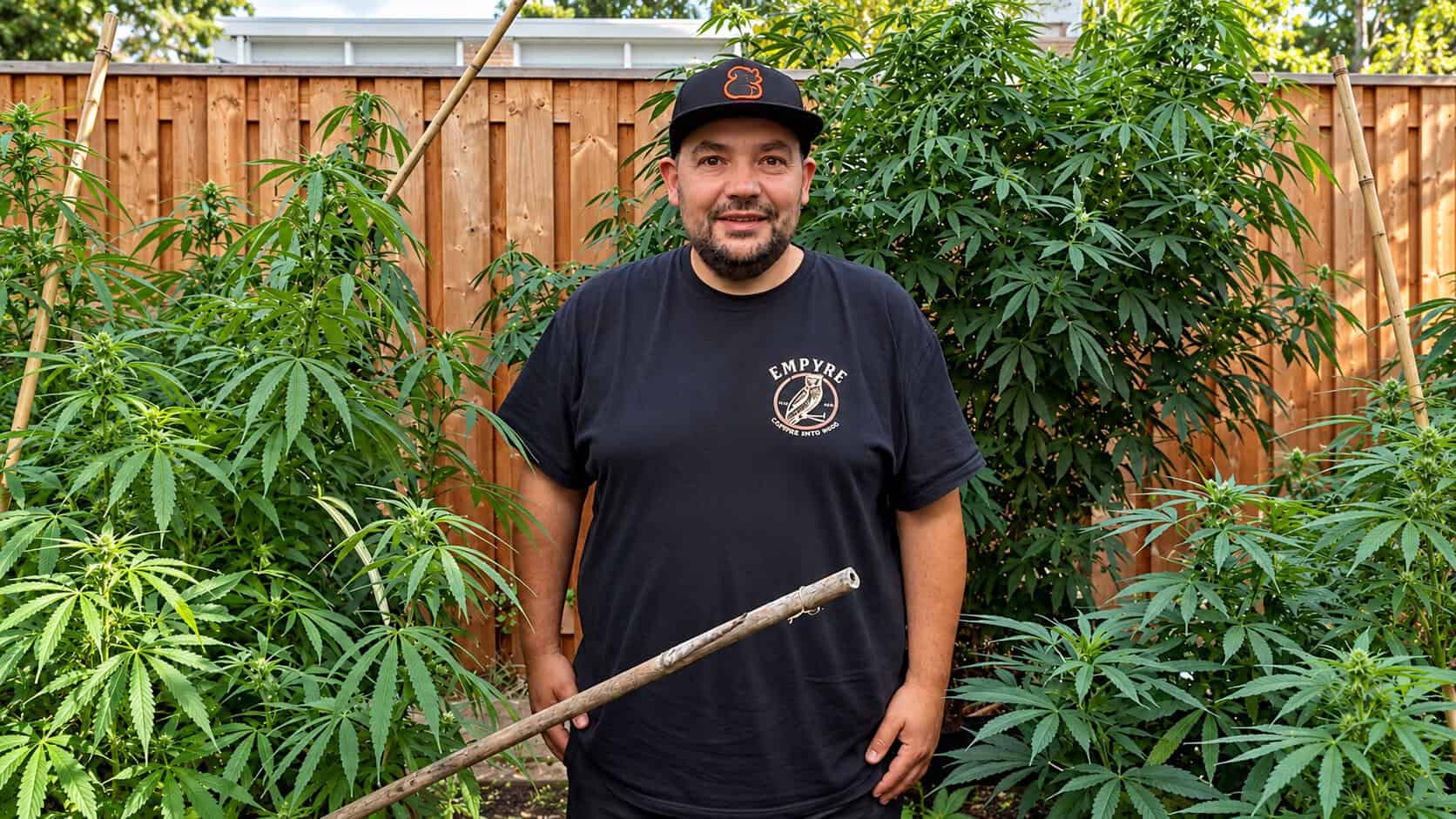
Seedstockers began in 2017 as a project within Dutch Passion, with an unusually candid business model for the industry. It did not claim to breed its own varieties: it sourced seeds from other breeders and spent little on in-house research and development. Today Seedstockers is an independent seed bank with its own breeding programme, dozens of awards and projects ranging from American genetics to triploid plants.
The Cannex spoke with founder Jouke Piepenbrink about that change, the difference between a breeder, a seed producer and a reseller, why an exceptional American clone may make an unstable seed line, and what to make of advertised THC figures approaching 40%. We also talked about old-school genetics, open access to genetics, autoflowers, underground breeding, and why seven generations of outdoor selection can mean seven years of work.
Selling seeds can be a form of activism
The Cannex: You spent more than ten years at Dutch Passion, and you have said Henk gave you the opportunity to build a new seed business almost from scratch. What did he teach you that is still part of Seedstockers today?
Jouke: I worked at Dutch Passion for exactly eleven years. Before that, I worked for companies that had nothing to do with cannabis, although cannabis was always my passion. Dutch Passion was the first place where I could combine that passion with my business experience.
I’m eternally grateful to Henk for helping me start my own company inside his. That was something very special for him to do. I learned a lot from him and from the other people there. Dutch Passion has a great deal of knowledge and really good genetics.
But one thing Henk told me often comes back to me. Before starting his company, he was a pro-cannabis activist. He organised demonstrations, made pamphlets and did the traditional activist work. Then he realised those activities did not reach very many people.
He discovered that selling cannabis seeds is a strong form of activism in itself. You spread seeds around the world, and people start growing plants. I strongly support that way of thinking. You can reach an activist goal through a business, even if that does not make you an activist.
We at Seedstockers are not activists, but we are an integral part of the cannabis community. We support it, work with activists and stay true to where we came from. We’re not just any business. We have a special task: to get as many seeds out there, and as many plants grown, as we can.
I had ideas that did not always fit Dutch Passion’s philosophy
The Cannex: What do you do differently from Dutch Passion?
Jouke: I want to answer carefully because I have a lot of respect for Dutch Passion. For their company, they do many things right. They have a legacy of old-school genetics, such as Orange Bud, Power Plant and White Widow. A big part of that is their own work. I don’t have the same history. Seedstockers has old-school strains too, but they were not originally ours.
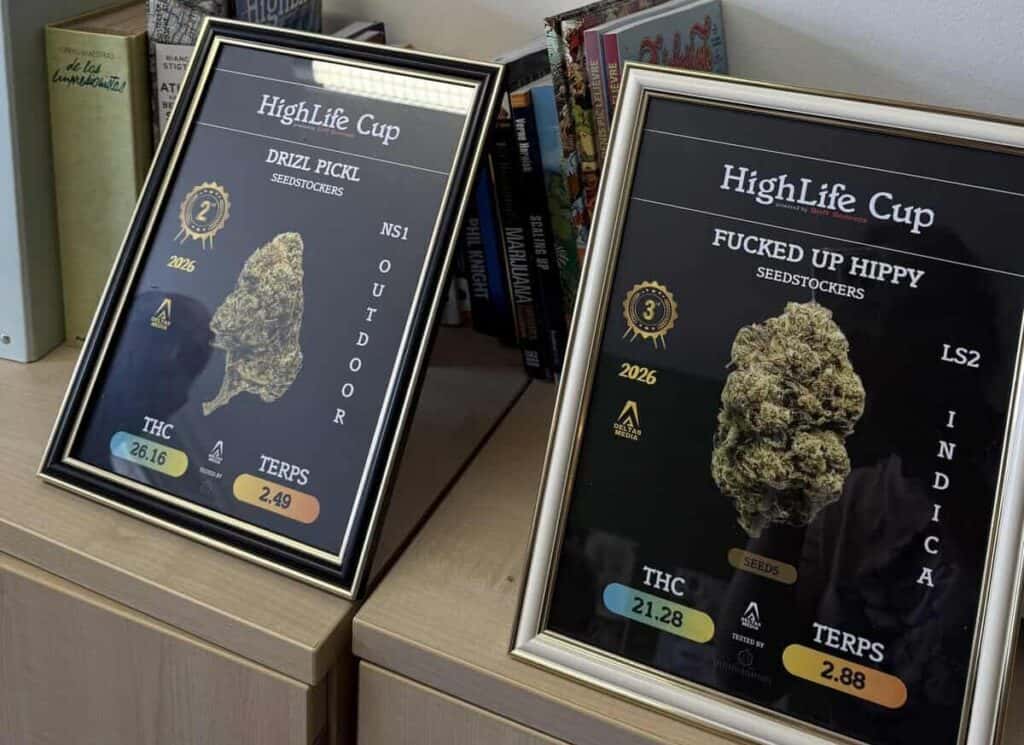
What we do really well is develop new genetics in Barcelona. We work with famous US strains, but we select them carefully and make something of our own. We’re not looking to release just another sweet Gelato or another Cookies. We’re looking for special flavours, like the sour, pickle-like profile of Drizl Pickl©, or a different direction altogether, like the very high THC of Fucked Up Hippie.
We’re also developing Madonna, our triploid strain. It has more chromosomes, bigger cells and, in our experience, a bigger, more productive plant. I expect other European companies, perhaps Dutch Passion too, to work with this kind of genetics later. We believe we were the first European company to develop our own strain of this type.
And I think we’re closer to the community. We’re a little younger and smaller, so it’s easier for us to move. We pay attention to younger people and new growers who are just starting out.
The Cannex: Did you create Seedstockers because you saw a part of the market Dutch Passion could not, or did not want to, serve?
Jouke: Henk and I had different reasons. He saw an expanding market and thought it made sense to have another brand rather than only more competitors. Spanish companies were growing quickly, so a Spanish brand alongside Dutch Passion seemed like a good idea. I agreed.
For me there was also a personal reason. Spain is my second home. My wife is from there, I have family there, I speak the language, I lived there for years and I know many Spanish breeders. After a long time at Dutch Passion, I was ready for the next step. I had my own ideas, and they did not always fit Dutch Passion’s philosophy. I wanted to build my own project.
The Cannex: How is marketing your own brand different from marketing somebody else’s?
Jouke: With somebody else’s brand, you’re interpreting what its founder would want. You translate that into a marketing plan, visuals and everything else. With your own brand, the question becomes: what would I do? That applies to the whole company, not just marketing. It’s much closer to my heart.
The Cannex: Is it easier?
Jouke: Yes, but not always. Hard decisions are harder when it’s your own brand. If I launch a strain and it doesn’t succeed, it was entirely my idea. There is nobody else to blame. The consequences are yours too.
From sourcing seeds to breeding our own
The Cannex: I found a Seedstockers interview from 2017. The business model was described very openly: the company did not breed or produce seeds itself, sourced large quantities directly from breeders and spent little on research and development. Today you talk about your own breeding projects and award-winning genetics. When did Seedstockers become a breeding company?
Jouke: That really is how we started. At the same time, we worked with a team of breeders. Some had their own genetics and were experimenting. Together with the people who produced most of our seeds, we began a small project involving selection and clones. Step by step, what was almost a hobby project developed into our own line. As Seedstockers grew and became more successful, we could put more time and money into it.
Another important point is that Seedstockers is no longer part of Dutch Passion. I reached a point where I had to choose. I was busy as Dutch Passion’s marketing director, while my own company was taking more and more of my time. Henk and I worked out a way for Seedstockers to become independent. We’re still friends and I still see the Dutch Passion team, but the companies are separate. The official separation happened in 2022. Around that time, we began selling the first strains from our independent breeding programme.
The Cannex: Was breeding always part of your plan?
Jouke: Yes. I love cannabis, genetics and biology. Deep down, I’m a creative person. I always have ideas about the company, including the product itself.
I’ve been a fan of autoflowers since the beginning. Remember those little Lowryders? I saw pictures of people growing them inside a PC tower. Maybe they weren’t always the best cannabis to smoke, but genetically they were an innovation: you could make a plant do something it had not done before. That intrigues me.
Vegetable and fruit seed production uses techniques that cannabis has hardly explored. I want to be involved in that development. I also have a lot of respect for the people behind Freakshow and other strains with unusual leaves. Anything that adds variation to the cannabis gene pool is welcome.
Can a good seed bank do no breeding at all?
The Cannex: Given Seedstockers’ own history, can a company be an excellent seed bank without breeding anything itself?
Jouke: Yes and no. You can be a very good, fair and honest company if you buy seeds and resell them. If you’re open about it, test the product, deliver good quality and charge a fair price, why not? A supermarket doesn’t produce everything it sells; it may also have its own house brand. Not breeding anything yourself does not automatically make you a bad company.
But if you want to be among the best seed banks, I don’t think it’s possible without breeding. You need full control over development, production and the decisions made at each stage. You can be a good and honest company without breeding. One of the best? I don’t think so.
The Cannex: How can a customer tell a company with its own genetics from a reseller?
Jouke: Look at the brand’s collection. Is there anything truly unique? If it has strains that nobody else offers, not even something very similar, it probably has its own way of obtaining, developing and producing that genetic material.
If a catalogue is made up mostly of widely available strains – White Widow, Haze, Gelato, Cookies – with little information about provenance or breeding work, that is often a sign of a bulk reseller.
Breeder and producer are different jobs
The Cannex: Should seed banks tell customers who actually bred a strain and who produced the seeds?
Jouke: Breeders deserve respect for their work. First, we need to distinguish a seed breeder from a seed producer. In this market, those terms are mixed up all the time.
I can take White Widow and reproduce its seeds. That does not make me the breeder; it makes me a producer. The breeder is the person who chose to cross one phenotype with another and then worked through the following generations. It’s a long job, and it deserves recognition.
If you use a breeder’s genetics and know who that breeder is, I think you should mention their name – if they agree. Some people deliberately remain underground for security reasons. A few breeders on my own team do not want their names made public, and I respect that.
Good seeds do not have to be expensive
The Cannex: Do good cannabis seeds have to be expensive?
Jouke: No. I think good seeds should be accessible. But that doesn’t mean every seed can be equally cheap. The cost depends on the genetics, how efficiently you can produce it and the scale of production. If your pollinator gives plenty of pollen and the female plant produces plenty of seeds, you can produce more seeds per square metre.
Some of the price differences in our own collection reflect exactly that. The more expensive strains often simply give us fewer seeds per square metre. Critical reproduces very well: both parents we use are good seed producers. That doesn’t necessarily say anything about the plant’s flower yield. Sometimes a plant gives you plenty of flower but few seeds.
Scale matters too. Producing on a few square metres, a hundred or a thousand makes a big difference. With the right genetics and scale, you can make good seeds at a fair price.
If someone sells huge volumes at an extremely low price, though, I would be careful. I’ve seen extremely cheap mass-production projects, including in Colombia, where quality control clearly wasn’t the priority. The plants from those seeds were not great: low THC, low productivity, sometimes diseases. If somebody has no money, they can try them. But for decent quality, I would invest a little more.
Classics and Superior
The Cannex: What is Seedstockers Superior?
Jouke: We have two lines: Classics and Superior. Classics is where we started. It contains established, recognisable genetics where we’re not claiming to have created the original strain ourselves. That means old heritage strains such as Northern Lights, Big Bud, AK and Skunk, but also Gorilla Glue and others. BCN Critical XXL is there too, and Permanent Marker is doing very well now. It’s an important part of the collection because many people simply want to grow those strains.
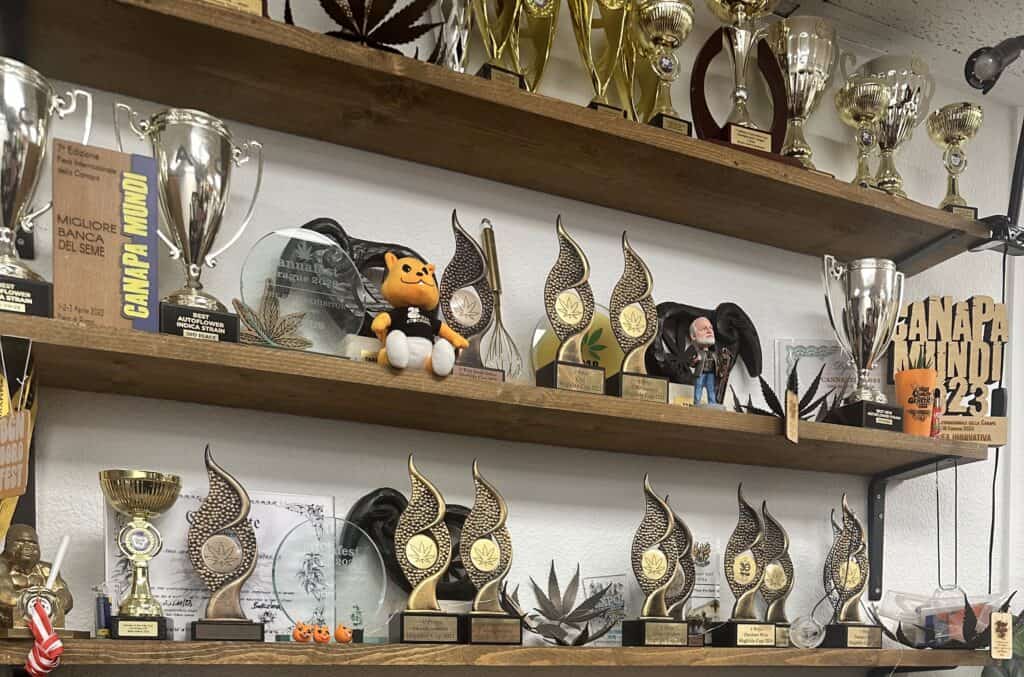
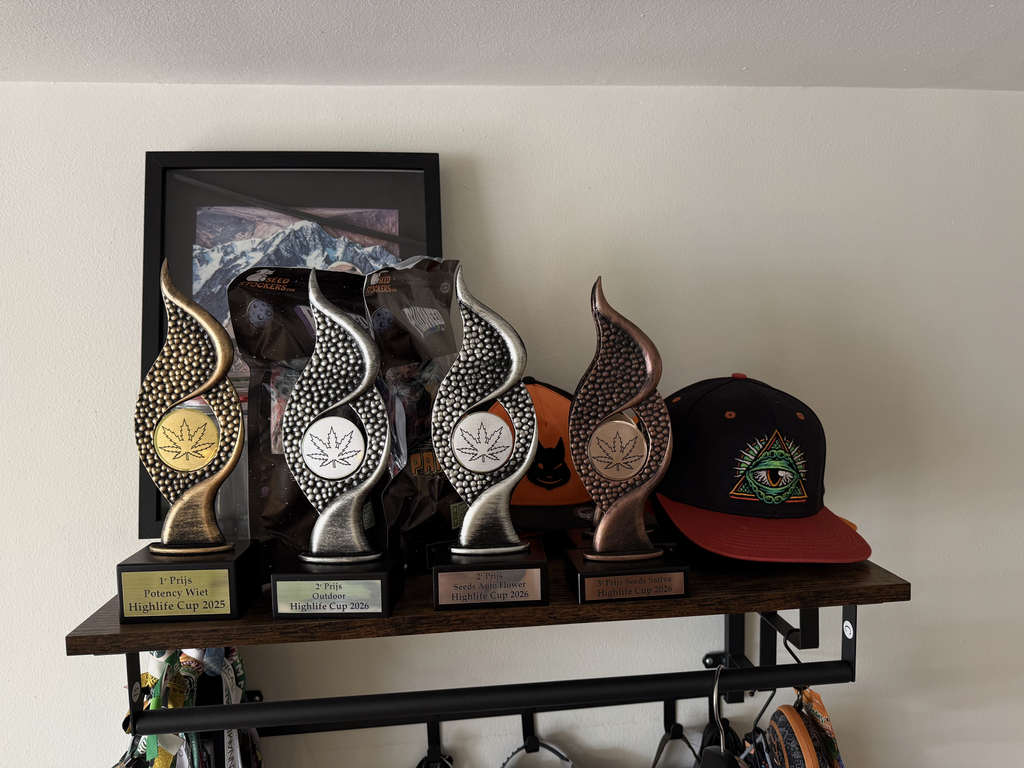
Superior is where it gets really interesting for me. Those are strains our team bred and developed. In simple terms, in Classics we’re mainly a producer; in Superior we’re the breeder. That’s where we create unique genetics and flavours and win cups. I think we’re already above seventy awards, which is quite a lot for a company that isn’t even ten years old. Superior is also where we can bring real innovations to market, like our triploid Madonna.
Why seed lines from elite American clones can be unstable
The Cannex: People often say American genetics are less stable than European genetics. Is that true?
Jouke: Not American genetics in general. What can be unstable are seed lines derived from elite American clones when they are reproduced without enough selection and stabilisation. The reason is quite easy to explain. In America, seeds traditionally have not been as important as in Europe. Producers often work with clones. They might grow a thousand plants from seed, choose one for its flower – smell, taste, yield – give it a name, keep it as a mother and produce cannabis from that clone. For that purpose, it works very well.
The problem begins when somebody takes that clone and simply reproduces it as seed. Even if you make an S1, crossing the plant with itself, you’ve made a new generation. Traits that were not obvious in the original plant can appear. It will not be exactly the same plant. I’ve seen hermies in early-generation seed reproductions of American clones, including Runtz, Ice Cream Cake and Wedding Cake.
Our challenge is to find material that works for further breeding. We keep the rate of hermies very low in both Classics and Superior, but you need to be careful when reproducing a US strain. American growers are excellent at hunting phenotypes: their large populations let them find extraordinary plants for flower. Turning an extraordinary clone into a good seed strain is another game.
We use many US clones. First we select and reproduce them, go through several generations and work towards stability. Then we use that material to create our own strains.
Autoflowers did not take over quite as Jouke expected
The Cannex: In 2022, you said about 70% of Seedstockers customers bought autoflowers, and you thought that might reach 80–85%. It’s 2026. Were you right?
Jouke: Kind of, but it didn’t happen exactly as I expected. Within the established cannabis community, autoflowers are losing a little importance. They are not disappearing, but their share isn’t growing the way I thought it would. We also have Superior genetics that appeal more to photoperiod growers, so in our traditional sales channels the balance is roughly where it was.
What changed is a new market: garden centres and DIY stores. For beginners who want a quick cannabis strain, an autoflower is easy to understand. If I include those sales, autoflowers are approaching 80% of our total. But in the existing cannabis market, I don’t see a further big shift towards them.
The Cannex: Are there countries that prefer photoperiod strains and others that prefer autoflowers?
Jouke: Our figures show more or less the same picture everywhere. The balance can vary by 10 or 20%, but every market has both groups of growers. Years ago, there were countries where we sold only one of the two categories. That is hardly the case anymore.
The Cannex: In that same interview, you said autoflowers had become almost comparable with feminised photoperiod genetics. Four years later, can we drop the word “almost”?
Jouke: No. Some individual autos really can compete. I recently grew Drizl Pickl© Auto outside. To be honest, it was off to the side; I was paying more attention to my big plants. Then I harvested and dried it, and it was really, really good. The lab measured it well above 20% THC, the taste was there, and the flowers looked fantastic for an outdoor plant. Even an experienced smoker might not notice the difference from photoperiod flower.
But I have to admit that many classic autoflowers have not developed much further. They’re good, and in flower quality they’re almost as good as feminised photoperiod strains. Not quite there yet.
A competitor claims 40% THC and the sale goes to them
The Cannex: In 2022, you said a flower could test at around 30% THC and still feel relatively mild if its terpene profile was uninteresting. Now seed banks advertise 35, 36, 38 and almost 40% THC. Has the industry become obsessed with one number?
Jouke: Definitely. It has bothered me for as long as I’ve worked in this industry. If I launch a new strain and write “15% THC” in the catalogue, I know I won’t sell it. Somebody sees 15%, then another brand says 40%, and thinks, “No, that’s not for me.”
That’s the reality and it’s a constant struggle. I want to promote my product and make good seeds, but I don’t want to lie or make things look better than they are. Then a competitor claims 40% and the sale goes to them. People grow that strain, smoke it, enjoy it – and never send it to a lab. They don’t know whether it was really 40%.
Potency is much more complicated. Some plants high in THC don’t feel especially strong; some with lower THC do. People forget terpenes, flavonoids and other cannabinoids. We’re only beginning to understand how they work together. And why should everybody want the strongest thing? I know Russians like vodka, but beer can be nice too. You don’t have to drink only vodka. It’s the same with cannabis.
If a test says 15%, I won’t publish it
Jouke: We try to be honest. On our website you can find certificates of analysis for many strains. But I’ll admit something: if someone sends us a flower, we have it tested and it comes back at 15% THC, I won’t publish that certificate. I know it would hurt sales.
If a sample tests well, we publish it. Then people can see the strain’s potential; they might sometimes do even better. But they should not expect every grower to reach that number.
We also take a portable Purpl Pro analyser to expos. People bring us flower grown from our seeds and from other brands. Almost every home-grown indoor sample we measure is somewhere between 15% and 22% THC. Outdoor can be lower.
The funny part is that the grower says, “This is great, I really like it.” Then they see 15% or 20% on the device and suddenly they’re disappointed. A plant can be strong and enjoyable without an extreme THC number. Results above 25–26% are rare even in professional grows. I would be sceptical of many 35% stories, too. There are well-documented problems with inflated potency results, inconsistent testing methods and lab shopping.
Stop looking only at THC. Look at taste, aroma and effect. Grow what you like.
The Cannex: Have you personally seen a 36–39% result from a laboratory you completely trust?
Jouke: No, never. The highest I’ve seen, as far as I remember, was 33 or 34%. I think it was Permanent Marker, and it was the only such result I have seen. I’ve seen plenty of higher numbers from American labs, but I don’t really trust those labs.
One of our breeders has a small lab of his own with professional equipment. I send him samples quite often. Usually he emails me the result. But when something tests above 27%, he calls: “Hey, what strain is this? I need to know.” So even 27% is special to him. Above 30% is very, very uncommon.
The Cannex: When Seedstockers publishes a THC figure in a certificate of analysis, is it the average of several plants?
Jouke: No. A certificate on our website is the result of one flower, usually one of the better top flowers. Some samples come from our own tests; others come from test growers we’re close to, who are essentially customers. It’s usually a top flower, not an average.
What remains of the old genetics
The Cannex: In 2024, you said the Northern Lights Special you remembered from the 1990s had disappeared and today’s Orange Buds were nothing like the old ones. When a seed bank sells a famous classic, how often is it really the original genetics?
Jouke: I don’t want to talk badly about other companies. I know some original mother plants from the 1980s and 1990s are still around. The real Neville’s Haze is still passed along; Northern Lights and Skunk #1 clones survive too. I know people who have them, and they probably are the real ones.
But I think a significant part of what is sold today under classic strain names is no longer exactly the original version. Keeping a mother plant alive can be difficult. Some can be maintained and renewed for years; others decline in quality, start to hermie or develop stress problems.
Today you can take plant tissue to a lab, clean it and grow a healthy new plant with the same genetics. That technology wasn’t available ten or twenty years ago. We are in a better position to preserve genetics now, but somebody still has to do the work. If you have an original Jack Herer cut and it is deteriorating, you need to invest in expensive lab work. Completely cleaning pathogens out of the cells can sometimes take two years. Still, it can be done, and that makes me optimistic about the future.
Cannabis genetics should stay open
The Cannex: Suppose someone buys Panty Punch, uses it in a cross, gives the offspring a new name and sells the seeds without asking you. Are you genuinely okay with that, even commercially?
Jouke: Yes. I also know the conventional seed business – vegetables, fruit and flowers. Here in the Netherlands, companies register and protect everything they can. You can end up paying royalties to grow a variety of broccoli because a brand introduced it first. I think that’s crazy.
We don’t really have that in cannabis, and I think that’s a good thing. Cannabis genetics are, and should be, open source in the sense that once they’re on the market, anyone can work with them. I wish those people good luck. I hope they make great new strains with our genetics.
Just taking somebody else’s strain, reproducing it and selling it under a new name with almost no work is another matter. Don’t assume the quality will automatically hold. If you reproduce Panty Punch in the next generation, I can’t promise a stable line. You may see unexpected traits or a lot of phenotype variation.
We did the work to bring this generation to market. Most such strains are hybrids, and we selected a particular father and mother. The next reproduction can change the genetics. So I don’t necessarily think simple copying is a good idea from a quality point of view. But I’m not against it. If you get a good result and build a business on it, good luck. I’m happy you chose our genetics.
Barcelona and the Netherlands
The Cannex: In 2024, you said cannabis in Barcelona’s social clubs was generally better than in Dutch coffeeshops. That’s a strong statement from a Dutchman. What went wrong in the Netherlands?
Jouke: Coffeeshop licences are limited. Imagine a town of 100,000 people with five or six coffeeshops. Their owners have held those licences for thirty or forty years, and customers will come because there are few alternatives. Add tourism in Amsterdam, and selling whatever you have is fairly easy.
Some coffeeshop owners tell me, “I’d love to sell the best quality, but my first problem is getting enough stock. Quality comes second.” The “back door” – the supply side of coffeeshops – remained unresolved for a long time.
Barcelona’s clubs were built by a younger generation, people my age and younger. They started with knowledge from California, the Netherlands and elsewhere, essentially two generations after the first Dutch coffeeshops. They have newer approaches and still want to build their businesses. There is real competition, so they have to offer a pleasant place, good service and quality product.
But I also see good changes in the Netherlands. A limited experiment now allows legal producers to supply a small group of coffeeshops. Those shops can buy through legal channels. I know many of the producers. Most grow in controlled conditions and make genuinely good cannabis with a range of flavours. Some use our genetics. If it goes well, I hope the rules will broaden over the next few years – that’s my hope and expectation, not something that has been decided.
What I especially like is that many growers in those companies came from the old underground market. They’ve found a place in the new system, so their knowledge and experience are not lost.
There’s movement in the other direction too. People from Barcelona are helping improve quality in Amsterdam. The team behind La Kalada, one of Barcelona’s best social clubs, is involved in projects in Germany and the Netherlands and works with an Amsterdam coffeeshop. Terps Army is doing similar work.
In an average coffeeshop you may still find five or ten fairly ordinary strains – something with a fashionable name, something sold as White Widow or Power Plant. Nothing very exciting. But many customers simply ask for weed, smoke it and are happy. Tastes differ. At least the changes are moving in a good direction.
The Cannex: You know both Spain and the Netherlands. In Spain, people sometimes joke that certain “Dutch” seed banks are Dutch mainly in their history and branding, while much of the actual breeding and seed production happens in Spain. Is there any truth in that?
Jouke pauses.
Jouke: I’m Switzerland. I’m staying neutral.
The Cannex: Good answer.
Millions of seeds and new genetics
The Cannex: In 2025, you said Seedstockers was supplying several million seeds a year. At that scale, what is harder: developing new genetics or maintaining consistent quality in what you already sell?
Jouke: Those are very different departments. Production needs good organisation. Large scale itself isn’t so complicated if the facility is well controlled and the team has experience. In the beginning you make mistakes, especially when you start in a new room or scale up a new strain. You have to test quality.
Once you’ve made the same strain several times in the same place, with the right people, the process becomes clear. If the head of production changes, you might have to start almost from zero. But when the parameters are fixed, it’s about doing the right things consistently.
Development has more freedom: pheno hunting, lab tests, trying one direction today and another tomorrow. Personally, I have more passion for that side. Production repeats a recipe. In development you can play a little. That’s more fun for me.
Seven generations can mean seven years
The Cannex: Let’s take Zmäkdaun©. Your description says you used an Erdbeer selection obtained through an Austrian outdoor grower and crossed it with Dutch Treat from Canada’s East Island Seeds. The line was developed over seven generations. What does that mean in practice?
Jouke: It depends on whether it’s an indoor or outdoor strain. In either case, you’re crossing and selecting seven times. Indoors, you can control the light cycle and keep working throughout the year. In theory, you could do four generations in one year.
With an outdoor photoperiod strain, seven generations means seven years. You can grow it only once a year. In this case, a grower with a greenhouse chose that cross, grew the plants, selected the best and continued with them the next year. He did that seven years in a row.
The Cannex: Patience. A lot of patience.
Jouke: Exactly.
Quick-fire: strains and people
The Cannex: Which of your own strains are you proudest of?
Jouke: Madonna.
The Cannex: Which strain in your catalogue hasn’t had the credit it deserves from growers?
Jouke: Candy Dawg Auto. It’s fruity with Kush notes, productive and fairly stable. Maybe it lacks one headline trait that’s easy to put on a label, but it’s a very good strain.
The Cannex: Which strain from another seed bank do you wish you had created yourself?
Jouke: Serious 6 from Serious Seeds. I have a lot of respect for their old genetics and for the work Simon and his family have done. Lines like that are worth trying while the people who preserve them are still doing it.
The Cannex: If you had to choose only autoflowers or only photoperiod strains forever?
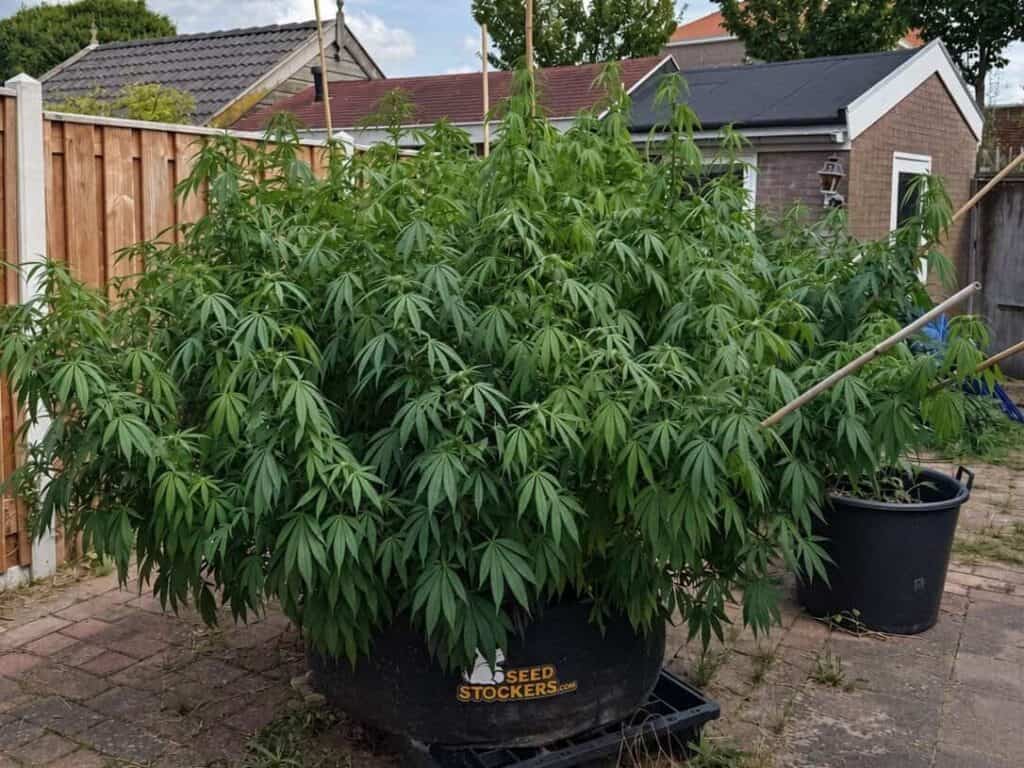
Jouke: Photoperiod. Look at my garden.
The Cannex: Old school or American genetics?
Jouke: They aren’t always opposites: there are plenty of old lines in modern American genetics. But if I’m choosing for diversity, I’ll take old school, because it has a wider range of characters.
The Cannex: THC or terpenes?
Jouke: Terpenes.
The Cannex: Which breeder outside Seedstockers do you admire?
Jouke: ACE Seeds. They work with rare genetics and preserve lines that aren’t necessarily in mass demand but matter for diversity.
The Cannex: What would you recommend to someone who has never tried Seedstockers?
Jouke: Today I’d say Drizl Pickl© Auto. I grew it outdoors and at first hardly paid any attention to it, and the result was excellent.
The Cannex: And to an experienced grower looking for something new?
Jouke: Madonna. Triploid genetics give you a completely different experience.
The Cannex: And where should a beginner start?
Jouke: With BCN Critical XXL, including the autoflowering version: an affordable price, a predictable character and a good result.